
When everyone can get it, does anybody want it?
In May and June each year, I’m typically busy with exams as an external examiner at Copenhagen Business School. This year too. Over the past few weeks, I’ve examined 70+ students together with their professors and I cannot count the times we discussed the theory of CPV as the students, in their abbreviation savviness, call Customer Perceived Value.*
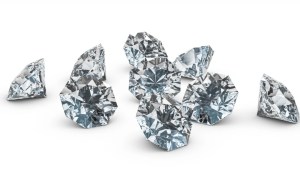
In the real world, Pandora is currently testing our assumptions about value and how consumers attribute value to diamonds. Pandora wants to make diamonds available to everybody. Lab-grown diamonds, that is. A sympathetic thought at first, but also one that has me questioning: How do we actually assign value and what happens when the extraordinary and rare becomes available to us all?
Do we attribute value to the aesthetics of the diamond or to the aesthetics and rarity of it? Diamonds are indeed gorgeous, but so are olivine stones from the lava craters in Lanzarote – yet those are plentiful and not on particularly many women’s wish-list. Real diamonds are still priced significantly higher than lab-grown diamonds, but both have been decreasing in price in recent years and are expected to continue doing so.
I asked a provocative question to one of the professors at Copenhagen Business School. Is the case of lab-grown diamonds similar – at least on the rarity scale – to the immaculate copies of e.g. Louis Vuitton bags made in China or Thailand? With anyone able to get a cheap and convincing Louis Vuitton copy, why is that different from the diamonds? Should the producers in Bangkok just have been smarter and called their fake bags “lab-grown bags” back in the 1980s to position them more appealingly?
The professor argued that because lab-grown diamonds have the exact same chemical structure as natural diamonds, they are the same – whereas the copy bags are not made from the exact same materials as the originals. But the professor was also very clear that a wedding ring or another significant piece of jewellery should, of course, be a real diamond, not a lab-grown one.
So why are they different? Molecular structure alone does not seem to explain it. So perhaps we do, in fact, value rarity and the gazillion tons of pressure it takes to create a real diamond. Plus hundreds of years of value built into the notion of diamonds and what they represent. Marilyn Monroe certainly didn’t sing about olivine stones being a girl’s best friend.
A jeweller I spoke to told me she uses “not lab-grown” as a selling point in her shop and that she has vowed never to stock lab-grown diamonds. Because she wants the real deal, despite the fact that neither she nor her customers can tell the difference between a lab-grown and a natural diamond with the naked eye.
So, the jeweller, like the professor, accepts that lab-grown diamonds and natural diamonds are essentially the same chemically, but both value them differently at least when it comes to something important.
That’s the interesting part to me. Not that value is more than the object itself – we all know that. But it suggests that scarcity seems to matter, even when we have a technically perfect alternative.
* Theory says that Customer Perceived Value (CPV) is the total value experienced by the customer minus the total cost of acquiring it (including time, effort, energy), for those of you wondering 🙂
Now, let’s chat!
I’d love to hear your thoughts on value versus scarcity and where you see technically perfect alternatives changing – or not – what we value. Just send me an email – it’s me at the other end, no bots or AI.
And to my Danish readers: is English ok for the Newsletter or would you prefer a Danish version? If enough of you say the word, I’ll make it happen in Danish too.

PS. I still haven’t figured out why the fake bags are different from the lab-grown diamonds. The real bags still hold premium value to consumers compared to the fake ones, as sales of luxury goods have been increasing for years. If you have a take on that, I’d be most curious to hear it!
Subscribe to Impact Newsletter
Twice a month I send out a brief newsletter with a thought, an observation or a challenge on leading and delivering with impact.
I can’t promise you’ll agree with all of them, but I’ll do my best to make each one worth your time.
Happy reading!